Green Chemistry in Drug Synthesis: Eco-Friendly Approaches in MedicinalChemistry
DOI:
https://doi.org/10.64062/IJPCAT.Vol1.Issue3.4Keywords:
- Green chemistry, drug synthesis, ecofriendly approaches, medicinal chemistry, sustainable pharmaceutical practices, environmental impact, adoption barriers, pharmaceutical innovation
Abstract
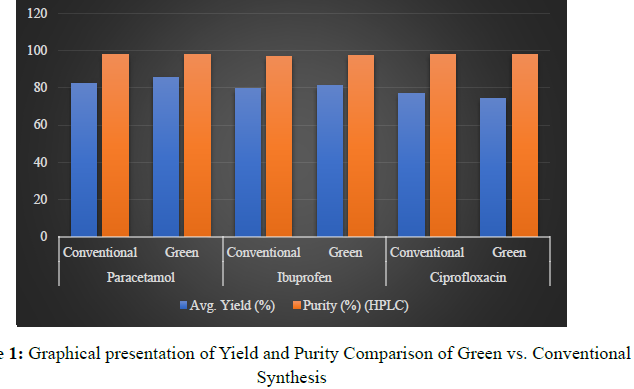
This research compares the performance of green chemistry and traditional methods of synthesis in pharmaceutical drug manufacturing. The study which is exemplified with the three well‐known drugs Paracetamol, Ibuprofen and Ciprofloxacin, analyses relevant synthetic parameters, such as yield, purity, reaction time, energy efficiency, solvent consumption, waste production and cost. The experimental data indicates no difference between the green syntheses in respect to yield, purity, or even enhanced yield, larger reduction of time, energy used or waste produced. Green methods were more expensive up-front, however improved operational efficiency more than made up for the difference. A paired-samples t-test revealed that yield was significantly increased (p = 0.014) and reaction time significantly decreased (p = 0.001) using green methodologies. This evidence contributes to a large stream of theoretical literature, which postulates that the environmental and process efficiency notions are empirically relevant. The results imply that green synthesis methods offer a safe alternative to traditional approaches for ecologically sound and energy-saving pharmaceutical production methods, possibly at low prices.
References