Recent Advances in Anticancer Drug Development: A Medicinal Chemistry Perspective
DOI:
https://doi.org/10.64062/IJPCAT.Vol2.Issue4.5Keywords:
- Anticancer drug development, Medicinal chemistry, Animal models, Structure–Activity Relationship (SAR), Targeted therapy, Nanomedicine, Prodrugs, Combination therapy.
Abstract
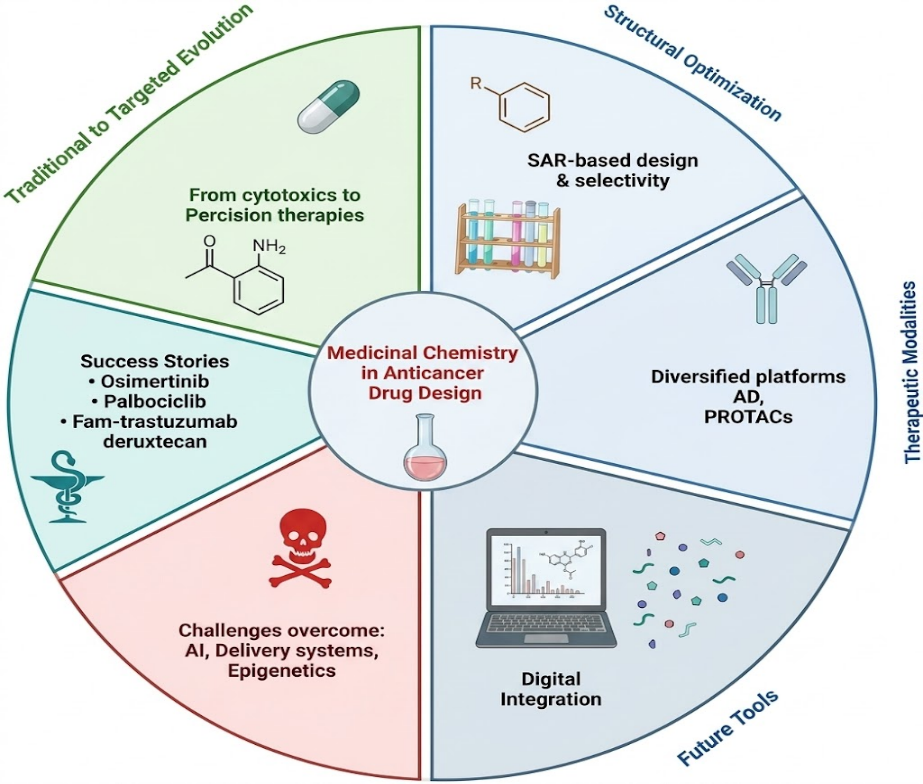
The development of anticancer drugs over the past few years has been heavily influenced by developments in the field of medicinal chemistry, especially due to the convergence of rational drug design, Structure-Activity Relationship (SAR) studies and novel drug delivery systems. The current review highlights animal-based preclinical trials that show the efficacy of a variety of therapeutic strategies such as targeted small molecules, natural product-derived molecules, prodrug delivery, nanomedicine, and combination therapies. Murine tumor models have shown evidence of significant improvement in the therapeutic outcomes, including reduction in tumor mass, apoptosis induced through mitochondrial and caspase pathways, angiogenesis inhibition, and pharmacokinetic and bioavailability. The use of the sophisticated animal models, which include xenograft, syngeneic, orthotopic and the genetically engineered mouse models, have offered in-depth information about tumor biology, drug mechanism and response to therapy under controlled conditions. Also, there is a promising prospect of nanotechnology-based delivery systems and prodrug strategies to enhance tumor-specific targeting and reduce systemic toxicity. Although these results are promising, a number of issues remain, such as translational differences between the animal model and clinical response, heterogeneity in the tumor, and the safety of highly potent compounds. In sum, this review in conjunction shows the central role of medicinal chemistry in the development of next-generation anticancer therapies and the significance of balancing the application of chemical innovation with biological validation to realize more effective and safer cancer therapies.
References
Downloads
Published
Issue
Section
License
Copyright (c) 2026 This is an Open Access article distributed under the terms of the Creative Commons Attribution (CC BY NC), which permits unrestricted use, distribution, and reproduction in any medium, as long as the original authors and source are cited. No permission is required from the authors or the publishers. (https://creativecommons.org/licenses/by-nc/4.0/)

This work is licensed under a Creative Commons Attribution 4.0 International License.