Medicinal Chemistry Strategies for Oral Squamous Cell Carcinoma: Target Identification, Drug Design, and Therapeutic Opportunities
DOI:
https://doi.org/10.64062/Keywords:
- oral squamous cell carcinoma; medicinal chemistry; target identification; drug design; structure–activity relationship; PROTAC; drug repurposing; PI3K/AKT/mTOR; EGFR; immune checkpoint
Abstract
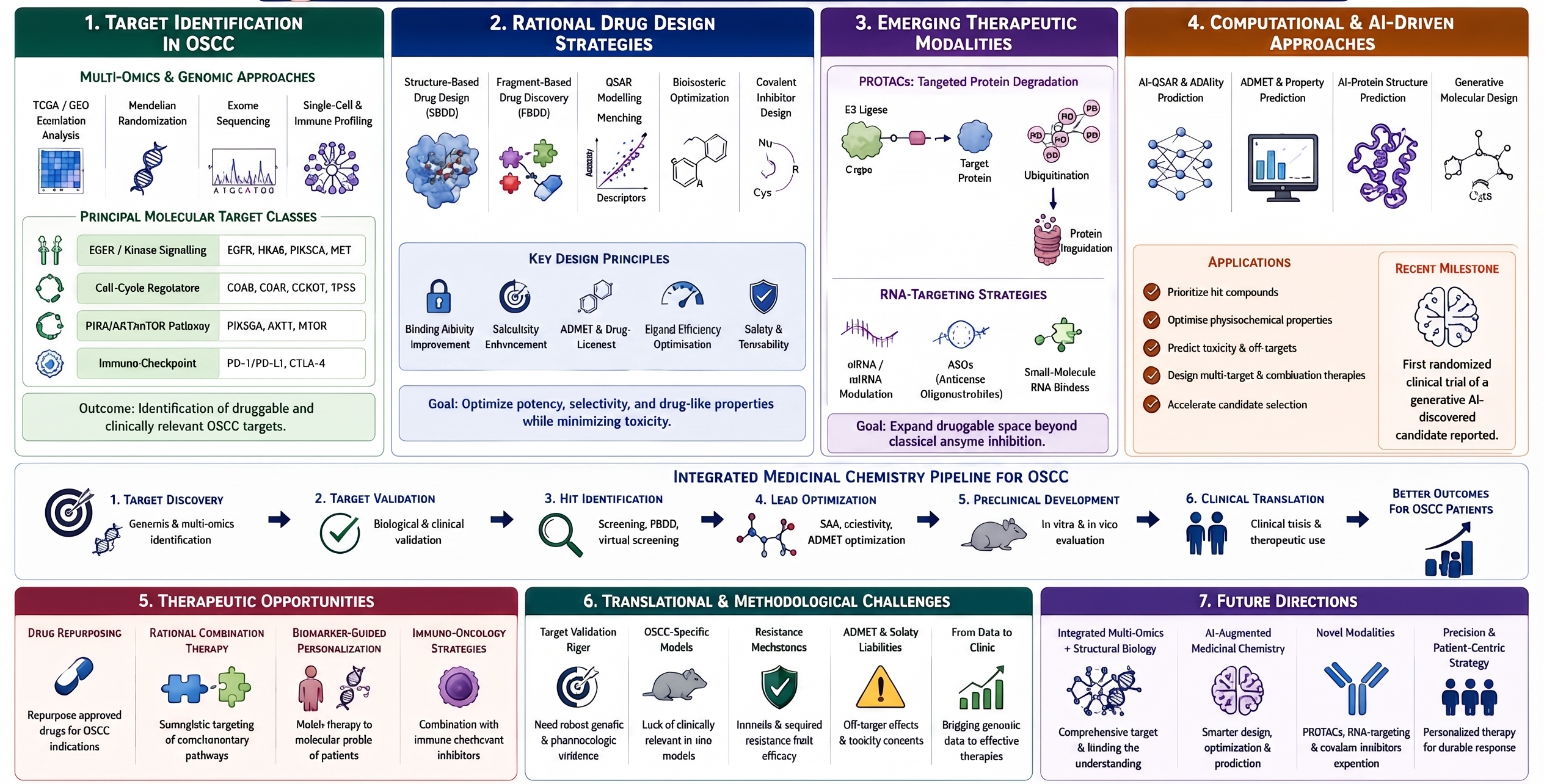
Oral squamous cell carcinoma (OSCC) accounts for over 90% of oral malignancies and remains associated with poor prognosis despite decades of therapeutic development, motivating sustained interest in applying modern medicinal chemistry methodology to this specific malignancy rather than relying solely on treatment strategies developed for other cancer types. This review examines the full medicinal chemistry pipeline as applied to OSCC, from molecular target identification through rational drug design to therapeutic translation. We first survey recent multi-omics and genomic approaches including TCGA/GEO-based expression analysis, Mendelian randomisation, and exome sequencing that have identified novel OSCC biomarkers and druggable gene targets, and examine the principal validated molecular target classes these approaches have converged on, including EGFR/kinase signalling, the PI3K/AKT/mTOR survival axis, cell-cycle regulators, and the PD-1/PD-L1 immune checkpoint. We then survey how established rational drug design strategies structure-based and fragment-based design, quantitative structure–activity relationship modelling, bioisosteric optimisation, and covalent inhibitor engineering have been or could be applied specifically to these OSCC-relevant targets, together with the emerging application of proteolysis-targeting chimeras (PROTACs) to oncogenic drivers in oral cancer. We further discuss therapeutic opportunities arising from computational drug repurposing, structure-guided combination therapy design, and artificial intelligence-guided property optimisation. Finally, we critically examine the gap between the rapidly expanding list of computationally and genomically nominated OSCC targets and the comparatively small number that have been pursued through to validated drug candidates, and outline priority directions including target validation rigor, OSCC-specific in vivo modelling, and closer integration of genomic target discovery with structure-based design needed to translate this expanding target landscape into genuine therapeutic advances for OSCC patients.
References
Downloads
Published
Issue
Section
License
Copyright (c) 2026 This is an Open Access article distributed under the terms of the Creative Commons Attribution (CC BY NC), which permits unrestricted use, distribution, and reproduction in any medium, as long as the original authors and source are cited. No permission is required from the authors or the publishers. (https://creativecommons.org/licenses/by-nc/4.0/)

This work is licensed under a Creative Commons Attribution 4.0 International License.